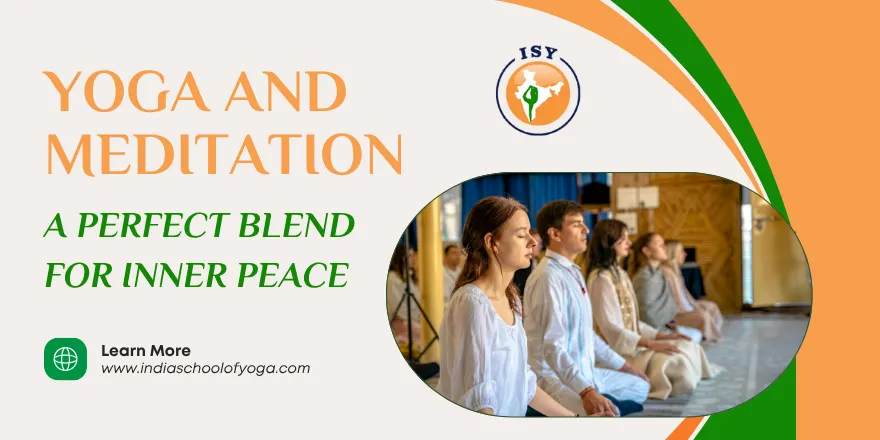
Yoga and Meditation: A Perfect Blend for Inner Peace
There is no better way to unwind than with a combination of yoga and meditation. It is more crucial than ever to maintain mental and emotional tranquilly in this hectic environment. Because there is always new information, deadlines, and obligations to deal with, we could feel exhausted, anxious, and lonely. Two practices that can help with this urge for solitude and reconnection with oneself are yoga and meditation. The strength of this bond is palpable in Rishikesh. The sacred Ganges flows with timeless wisdom as the ringing of temple bells echoes through the air first thing in the morning. Rishikesh is a popular destination for those seeking a spiritual reset, drawing visitors from across the globe.
Learn the ins and outs of yoga and meditation, how they work together, and how to begin this transformative practice with the help of this comprehensive book.
How Can One Benefit from Yoga and Meditation? Mastering the Foundational Skills
Prior to assembling these procedures, we must ascertain their individual purposes. Yoga is generally seen by Westerners as nothing more than a kind of exercise. However, its range is far larger.
Originating in ancient India, yoga is a practise that benefits the whole person. "Union" in yoga refers to the merging of one's own mind with the universal mind. Asanas, or physical postures, are just one of eight components of yoga, according to the sage Patanjali. Finding inner peace, increasing self-awareness, and learning to make healthy choices are the true aims of yoga. Pranayama (breath control), meditation, physical postures, and moral guidelines all play a role in this.
Mind training to achieve a state of profound awareness and focused attention is what meditation is all about. The goal is not "emptying the mind," but rather maintaining an objective stance towards one's own thoughts. This establishes a connection between your ideas and your responses to them. Being present is what it's all about. Asana number seven on the yoga mat is dhyana, or meditation. The final limb, Samadhi, which might be translated as "happiness" or "enlightenment," is also reached by this path.
Enquiring into meditative practices like yoga and meditation is like probing a system for its central mechanism. The pinnacle of every yoga practice is meditation.
The Practices of Yoga and Meditation Go Hand in Hand
Although they focus on separate aspects of the mind and body, yoga and meditation are really fairly comparable. Yoga prepares the body for meditation by reducing stress in this way.
The physical postures (asanas) practiced in yoga can help you become more flexible, stronger, and less anxious by calming your mind and body. When your body is at ease, you may meditate for longer periods of time. One component of yoga that aids with nervous system calmness is pranayama, which is focused breathing. To prepare for meditation, this is a great method. Yoga is similar to moving meditation in many respects.
Through meditation, one can transcend their physical self. You have found a quiet place to sit with the help of yoga. Yoga can be taxing on the body and requires a lot of energy, in contrast to meditation's emphasis on stillness and inward concentration.
To prepare the ground for yoga, one must till it, remove stones and weeds, and so on. The practice of meditation is analogous to tending to a seed of consciousness after it has been planted in prepared soil. If one is present, the other will be able to flourish.
Yoga and Meditation: A Life-Changing Practice
You may improve your life in countless ways by practicing yoga and meditation. Maintaining a regular yoga and meditation practice creates a solid foundation for health that follows you everywhere.
Advantages to the Emotional and Mental Health:
- Stress and Anxiety Reduction: One of its most well-known qualities is its ability to reduce stress and anxiety. By calming the sympathetic nervous system, yoga helps us to "fight or flight." Meditating makes our brains less sensitive to stress.
- Improved Focus: The ability to tune out distractions and give undivided attention to a task at hand is greatly enhanced by these exercises, which train the mind to live in the present moment.
- Emotional Regulation: Meditation provides a judgment-free zone where you may assess your feelings, allowing you to better control your anger and impatience. The outcome is that you develop greater emotional stability.
- Enhanced Self-Awareness: You will gain a deeper understanding of your own thoughts, deeds, and motivations as a result of this integrated practice's emphasis on strengthening your inner connection.
Benefits to the Physical Self:
- Strength Training and Flexibility: The asanas in yoga help you build lean muscle and improve your range of motion, both of which reduce the risk of injury.
- Respiratory and Cardiovascular Health: The heart and lungs benefit from pranayama exercises because they make the lungs stronger and better able to use oxygen. The exercise also aids in reducing blood pressure and improving circulation.
- Reduced Back and Neck Discomfort: Yoga strengthens the abdominal and spinal muscles, which in turn helps address slouching and other forms of chronic back and neck discomfort.
A solid groundwork for self-care is provided by both yoga and meditation, which is why they are both advantageous. They won't magically make you healthier and stronger; rather, they are a long-term strategy.
A Beginner's Guide to Setting Out on an Adventure
Taking a single step is all it takes to achieve inner peace. Starting with simple exercises and sticking to them regularly is the key for newcomers to yoga and meditation.
- Start Small: Practise for ten minutes here and there; an hour a day isn't necessary. Get in ten minutes of light yoga, and then sit quietly for five. Time is less important than consistency.
- Relax and Breathe: The breath is your anchor. Keep in mind the connection between your breath and the movements you make when practicing yoga. As you sit in meditation, just watch the natural pattern of your breath.
- Find Assistance: The Internet is rife with no-cost resources. If you're new to yoga or meditation, you might look at beginner-friendly apps or videos on YouTube. You can reap the benefits of a welcoming space and expert instruction by enrolling in a yoga or meditation class.
- Make Room: Find a quiet spot in your house where you may meditate or yoga. Just make sure you have a cosy mat and a pillow on hand. Insight into one's own behaviour is prompted by this, which aids in the formation of new routines. A three-day yoga retreat in Rishikesh, for example, would be an excellent introductory experience because of the solid and inspiring groundwork it might provide.
Certification and Rishikesh Retreats to Enhance Your Practice
A lot of people turn what starts as a hobby into a full-blown obsession and even a lifestyle. Rishikesh is the place to go if you want to do scuba diving. Serious transformation might take place in the holy town because of its atmosphere and excellent instructors.
Here you may find some of the top yoga and meditation retreats, perfect places to get away from it all and concentrate on your practice. The duration of these retreats might range from a few days to a full week. Going on a 10-day yoga retreat to Rishikesh can be the turning point in your life that you've been waiting for.
Whether your goal is to teach others or simply to further your own understanding of this practice, the following step is to receive a certification in yoga and meditation. A structured curriculum, such as Rishikesh's 100-Hour Yoga Teacher Training, covers all the bases of yoga, from anatomy and philosophy to teaching methods and the more advanced aspects of the practice. Further advanced courses, like a 300-hour yoga teacher training in Rishikesh, can help you hone your skills and expand your knowledge. If you complete a 200-hour yoga teacher training program in India, you can get a credential from the yoga capital of the world. All around the globe, this certification is known and esteemed.
Final Thoughts: A Foundation for Finding Serenity Within
Yoga and meditation together are a beautiful and effective way to communicate with your physical and mental selves. When you practise yoga, you can let your body loosen up and open up, creating room for peace. When individuals in that region meditate, it helps them relax their minds, which in turn brings them a profound and enduring calm. It's a journey inward, a rendezvous with your true essence.
It doesn't matter if you're meditating on a mat in your living room or by the Ganges. This approach is for you right now. On a path of a thousand miles, it truly begins with a single mindful breath.


