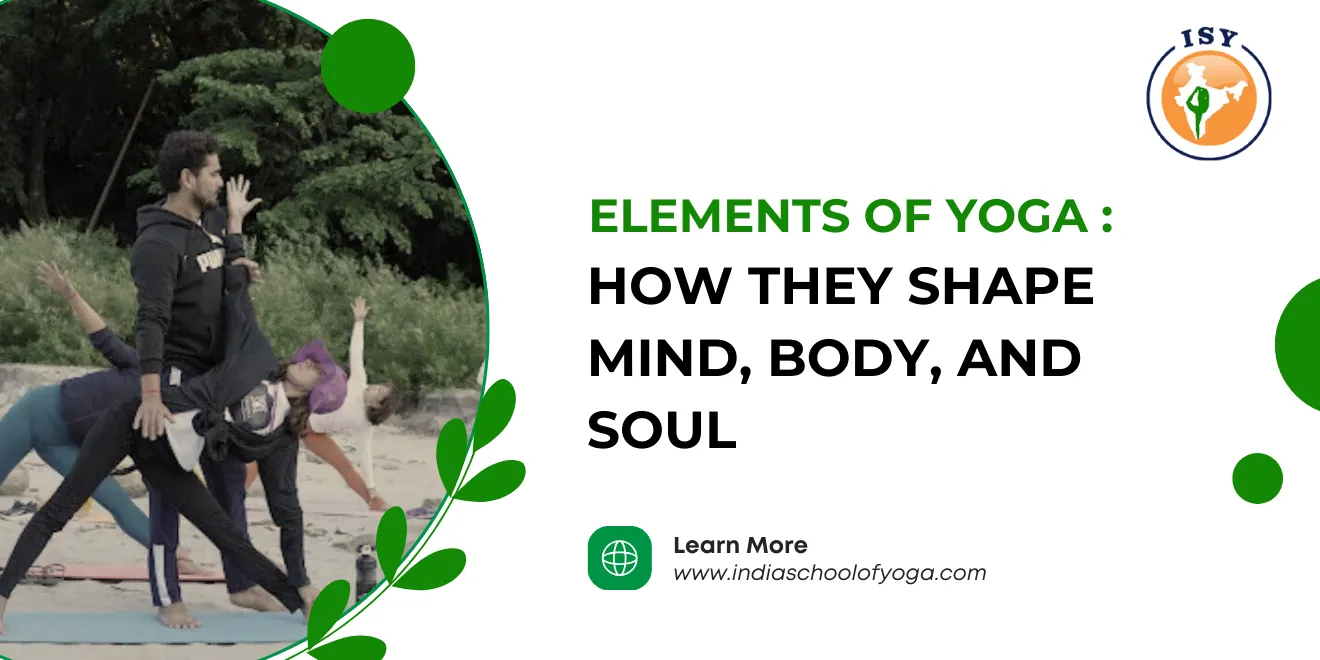
Elements of Yoga: How They Shape Mind, Body, and Soul
A lot of people don't know this, but yoga does more than just work out your body; it also connects your mind, body, and spirit. To get the most out of yoga, you need to know what are the elements of yoga. This practice can change your life. This essay will discuss the 8 elements of yoga, the five elements of yoga, and their origins in the ancient Vedas. Learning about the various elements of yoga can help you grow as a person and get healthier, whether you're going to Rishikesh for 100 Hour Yoga Teacher Training in Rishikesh, a 3 Days Yoga Retreat in Rishikesh, or just to improve your own practice.
What Are the Elements of Yoga?
Yoga is a way of life because it has moral, physical, mental, and spiritual parts. All of these things work together to help people grow in a healthy way, which helps them find themselves and feel at peace. By connecting your body, mind, and spirit, yoga helps you grow and live a life with meaning.
The 8 Elements of Yoga: How to Improve Your Skills
The 8 elements of yoga, also known as Ashtanga Yoga, can teach you how to control yourself. Patanjali's Yoga Sutras, which is an important book on yoga philosophy, have them.
Yama (Restraints): These moral rules tell us how to behave in the world. They don't lie (satya), steal (asteya), or get attached (aparigraha), and they are moderate (brahmacharya). People learn how to be nice to others and get along better when they do yamas.
Niyama (Practices): These rules you set for yourself will help you grow as a person. They are cleanliness (saucha), happiness (santosha), self-control (tapas), self-study (svadhyaya), and giving yourself to a higher power (ishvara pranidhana). Niyamas help you learn more about yourself and bring your spirit into balance.
Asana (Postures): Physical postures make the body stronger, more flexible, and more balanced, which makes it easier to meditate deeply. Asanas are good for your body and help you relax. This is a great way to begin looking into your spiritual side.
Pranayama (Breath Control): Controlling your breath is a way to balance your life energy (prana). This calms your nervous system and gives you more energy. Pranayama links the physical and spiritual worlds and helps both the mind and body feel better.
Pratyahara (Sense Withdrawal): This is the practice of letting go of things that keep your senses from being aware of the outside world so you can become more aware of yourself. It prepares the mind for deeper meditation and concentration.
Dharana (Concentration): Focusing on one thing at a time helps you clear your mind and get your brain ready to meditate.
Dhyana (Meditation): This is a way to completely focus and feel at peace with yourself and get to know yourself better.
Samadhi (Unity): The highest level of being one with the divine is samadhi, or unity. It is the freedom of the spirit and the complete union of body, mind, and spirit.
These eight limbs work together to help people live a wise and balanced life.
Which Veda Mentions About the Elements of Yoga?
The Vedas, which are very old Indian texts, are the basis for yoga. According to the Vedas, rituals, meditation, and living a good life are all ways that physical, mental, and spiritual practices can work together. Patanjali's Yoga Sutras show how to put the 8 elements of yoga together. They agree with the idea that a person's and the universe's energies should be in balance, which is a key idea in yoga. Vedic hymns show you how to breathe, think straight, and do the right thing. These thoughts helped yoga change and grow over time. These works stress how important it is to keep the body, mind, and spirit in balance, which is still a big part of yoga today.
The Five Elements of Yoga: The Pancha Mahabhutas
The five elements of yoga, or Pancha Mahabhutas, are what yoga says make up the universe and the human body. Yoga helps to balance these things, which is good for your mental, emotional, and spiritual health.
Earth (Prithvi): This word means strength, stability, and firmness. When the bones and muscles are strong, the body is safe and strong on the ground.
Water (Jala): Means being clean, flexible, and able to change. Water helps you stay calm and keeps the fluids in your body, like blood and lymph, in check.
Fire (Agni): It means life, change, and energy. Fire speeds up your metabolism and digestion, which gives you energy and makes you want to do things.
Air (Vayu): This means movement, breathing, and energy that changes all the time. Air helps the body's prana flow, which is why breathing is so important.
Space (Akasha): This means being open, paying attention, and getting better. Space helps you relax and connect with your spirit, which is good for your growth.
People who do yoga bring their physical and spiritual energy into balance by connecting them. This puts them back in balance.
Putting the Elements of Yoga Together in the Real World
You can see what yoga really is when you can easily do it every day, not just on the mat. You can start your day with pranayama to balance the air element and then do grounding asanas to connect with the earth element. Using yamas like non-violence in your relationships or niyamas like contentment when things are hard can turn everyday tasks into spiritual practices.
Beginners usually focus on asanas, but as they practice more, they start to understand things like pratyahara, dharana, and dhyana better. Patanjali put the 8 elements of yoga in this order, which is similar to how he moved people from outer discipline to inner awareness. For example, when you're stressed out, taking a few deep breaths or practicing gratitude (santosha) during a busy workday can help you stay calm. This makes yoga a real thing to do.
It's easier to understand this integration if you think about the seasons. In the winter, restorative poses and other grounding positions are good for the body. Cooling pranayama is good for the hot energy in the summer. When you change your yoga to fit how your body and mind work, it becomes a journey that is always changing and adapting.
Old Ideas and New Science Mix
More and more, modern research backs up what people used to think about yoga. Pranayama controls the autonomic nervous system, which lowers stress and makes the heart rate more variable, according to research in neuroscience. Meditation, particularly dhyana, has been shown to increase gray matter density in cerebral areas associated with concentration and emotional regulation. The five elements of yoga aren't real, but they do fit with how real bodies work. Earth is like the musculoskeletal system, water is like circulation, fire is like metabolism, air is like breathing, and space is like neural networks.
This combination of science and spirituality doesn't take away from the mystical parts of yoga; instead, it helps people today see how good it is for them. Research on asanas, for instance, indicates that they can alleviate chronic pain and enhance flexibility. Psychological research says that good relationships are based on yamas and niyamas, which are rules for how to act morally.
Finding Your Own Balance by Knowing the Elements of Yoga
Everyone's elemental makeup is different, and it affects their physical, emotional, and spiritual traits. People with a lot of fire in them might be able to digest food well and make decisions quickly, but they might also be impatient. Bending forward and other things that cool them down might make them feel better. People who are water-dominant may be nice and easygoing, but they may also get too emotional and need grounding poses like mountain pose.
The elements can also work together differently depending on the weather and the time of year. There is a lot of earth in winter, so it needs things that wake it up, like sun salutations. Things that cool down summer's heat, like moon salutations, are needed. Yoga practitioners can find the right balance in their practice by knowing what elements make up their bodies and what's going on around them. This makes them stronger and more at peace.
Various Elements of Yoga and How They Affect You
Each part of yoga is good for your health in its own way:
- The body's health: Asanas help your muscles get stronger, more flexible, and better at moving blood. Pranayama helps you breathe better and gives you more energy.
- Mental clarity: Dharana and dhyana can help you concentrate better, feel less anxious, and become stronger emotionally. All of these things will help you keep your mind calm and focused.
- Emotional well-being: Yamas and niyamas encourage being honest, kind, and getting along with other people. These things can help people get better and make their relationships stronger.
- Spiritual growth: Pratyahara and samadhi can help you get to know yourself better, which can lead to deep peace and a connection with God.
People who want to get better at yoga or become a teacher through programs like the 200 Hour Yoga Teacher Training in India or the 300 Hour Yoga Teacher Training in Rishikesh should know about these benefits.
You can get healthy by going to yoga classes and retreats.
There are a lot of things to do at both the 10 Days Yoga Retreat in Rishikesh and the 3 Days Yoga Retreat in Rishikesh that will help you learn more about the elements of yoga. These classes include asanas, pranayama, meditation, and philosophy to help you understand how yoga affects your mind, body, and soul. People who want to teach yoga can learn how to do it well in Rishikesh's 100 Hour Yoga Teacher Training in Rishikesh or 200 Hour Yoga Teacher Training in India.
Retreats and trainings are great places for people to meet others who share their interests and learn from teachers who have been doing it for a long time. They also give you a structured way to do yamas and niyamas, which helps you grow as a person and as a spirit.
What do the Various Elements of Yoga Mean in the End?
Yoga is a full way to live a life that is balanced, healthy, and spiritually fulfilling. It has eight limbs and five basic forces. Patanjali put these things together based on what he learned from the Vedas. They help people get better health, clearer minds, and more aware of their spirits. If you want to become a certified yoga teacher through a 100 Hour Yoga Teacher Training in Rishikesh or a 200 Hour Yoga Teacher Training in India, these tips will help you get more out of your yoga practice. Check out our blog post on the Objectives of Yoga to find out more about what yoga is all about.


